I’ve been formulating natural skincare for years, and the biggest shift I see in people’s skin isn’t from a miracle ingredient. It’s from showing up for their skin regularly, with simple, nourishing steps that support the skin’s own biology.
Let me walk you through what a grounded, natural morning and evening routine actually looks like. No overwhelm. No gimmicks.
Why routine matters more than products
Your skin has its own rhythm. During the day, it faces UV exposure, pollution, and environmental stress. At night, it goes into repair mode, DNA repair peaks, collagen synthesis ramps up, and the barrier works to restore itself.[1] Research has confirmed that the skin’s circadian clock actively controls collagen production, with nocturnal synthesis occurring at measurably higher rates than during the day.[2]
When you support those two phases with the right steps at the right time, you’re working with your skin, not against it.
Think of it like tending a garden. You water in the morning and mulch at night. Both matter. Neither replaces the other.
Disclaimer: Some links in this post are affiliate links. If you buy through them, I may earn a small commission at no extra cost to you.
Your natural morning skincare ritual
Morning is about protection and preparation. You’re getting your skin ready to face the day.
Step 1: Gentle cleanse (or just rinse)
Here’s something the beauty industry won’t tell you: you may not need to cleanse your face in the morning.
If your skin tends to be dry or sensitive, a simple rinse with lukewarm water is often enough. Your skin hasn’t been exposed to anything overnight, and stripping it with cleanser twice a day can actually damage the skin barrier.
If you feel you need a morning cleanse (oilier skin types, for example), use a very gentle, low-foam formula. Look for one without sulphates, synthetic fragrance, or alcohol.
Step 2: Hydrating toner or mist
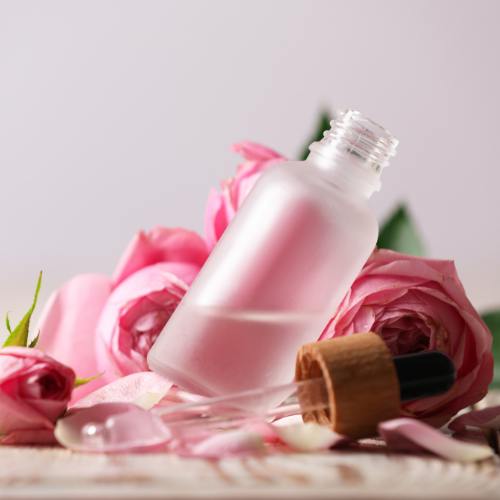
This is one of my favourite steps. A light, water-based toner or rose water mist preps your skin to absorb everything that comes next.
Rose water is beautifully simple. Research on Rosa damascena shows it has anti-inflammatory properties, suppressing neutrophil activation and reducing inflammatory markers on the skin.[3] It smells lovely and is gentle enough for even sensitive skin.
Spray it on, or apply with clean hands. No cotton pads needed.
Step 3: Light serum (optional but lovely)
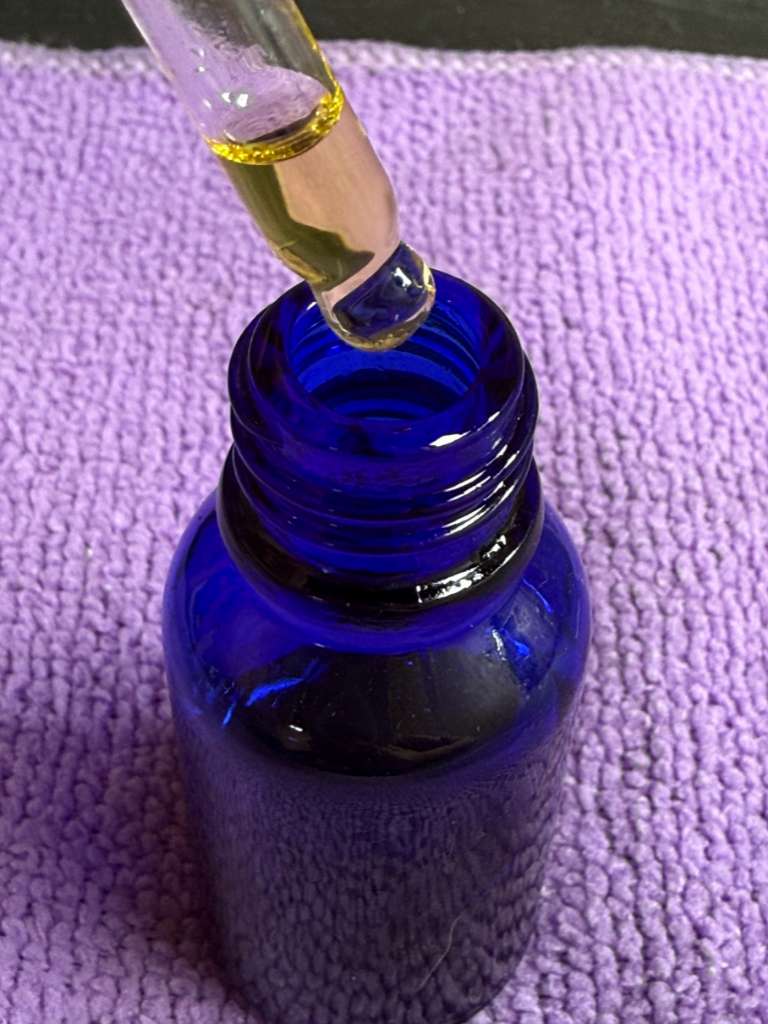
If you use a serum, morning is the time for antioxidants and hydration. Vitamin C is the classic choice (it protects against UV damage and brightens skin), but it can be sensitising for some people.
Alternatives I love:
- Hyaluronic acid serum: Draws moisture into the skin. Apply to slightly damp skin for best results.
- Bakuchiol: A plant-based alternative to retinol. Gentler, vegan-friendly, and suitable for daytime use.
- Squalane: A lightweight oil that mimics skin’s natural sebum. Works on all skin types, including oily.
Step 4: Moisturise (if your skin needs it)
Not everyone needs a heavy moisturiser. If you’ve used a facial oil or a hydrating serum, your skin may already be sorted.
If you do use a moisturiser, choose one with simple, recognisable ingredients. Aloe vera, shea butter, and plant oils are good foundations. Skip anything with mineral oil, silicones, or synthetic fragrance if you can.
Step 5: Sun protection

This is non-negotiable. SPF is the single most evidence-backed anti-ageing step you can take. A randomised controlled trial in over 900 adults found that daily sunscreen users showed 24% less skin ageing over 4.5 years compared to those who used it only occasionally.[4] A separate year-long study found that all photoageing parameters improved significantly with daily broad-spectrum SPF 30, with 100% of participants showing improvement in skin clarity and texture.[5]
Look for a mineral sunscreen with zinc oxide or titanium dioxide. These sit on top of the skin rather than being absorbed, which many people find gentler. Just make sure yours is vegan, as some mineral sunscreens use carmine (a red, insect-derived pigment) in tinted formulas.
That’s it. Five steps. Ten minutes or less.
Your natural evening skincare ritual
Night is when your skin does its deepest work. Your job is to clean the day away, give your skin the right nutrients, and then let it get on with it.
Step 1: Remove your cleanser or makeup first
If you wear SPF, makeup, or both, double cleansing in the evening is worth it.
Start with an oil-based cleanser to dissolve SPF and makeup. A gentle massage with jojoba oil works beautifully and is a well-established method for removing makeup without stripping the skin barrier. Jojoba is technically a liquid wax ester composed of around 98% wax esters, which makes it structurally similar to human sebum and very well-tolerated by skin, including acne-prone types.[6]
Follow with a gentle water-based cleanser to remove any residue.
If you don’t wear makeup or SPF, one gentle cleanse is fine.
Step 2: Tone and balance
Use the same toning step as your morning routine if you like. Witch hazel (alcohol-free) is a good evening choice. Its tannins give it astringent and antibacterial properties, with research showing it can inhibit the growth of bacteria including Staphylococcus aureus and Candida albicans.[7] It has also demonstrated anti-inflammatory activity in human skin fibroblast studies.[8]
One important note: always choose alcohol-free. Many commercial witch hazel products contain added isopropyl alcohol, which can strip the skin barrier with regular use.
Or skip this step entirely. It’s optional.
Step 3: Active ingredients (if you use them)
Evening is the time for anything that increases cell turnover or needs to work without UV exposure. This includes:
- Bakuchiol: A randomised, double-blind study published in the British Journal of Dermatology found that bakuchiol performed comparably to retinol in reducing fine lines and improving skin texture, with significantly less irritation.[9]
- Rosehip oil: Contains trans-retinoic acid (a natural form of vitamin A), essential fatty acids, and carotenoids. A pilot study found that daily application of cold-pressed Rosa canina seed oil significantly reduced wrinkles and UV-induced spots over 12 weeks.[10] In a separate 8-week trial, participants using rosehip oil twice daily saw 23% improvement in fine lines and wrinkles.[11]
- Vitamin E: An antioxidant that supports barrier repair. Often combined with other oils. A little goes a long way.
You don’t need all of these. Pick one or two that suit your skin’s current needs.
Step 4: Facial oil or night moisturiser
This is the nourishing, sealing step. The skin’s circadian rhythm shifts repair and synthesis activity towards the night hours, making evening the ideal time to support it with nourishing actives.[1]
Some wonderful options:
- Rosehip oil: For anti-ageing, scarring, and uneven tone.
- Argan oil: Rich in vitamin E and fatty acids. Particularly good for dry or mature skin.
- Evening primrose oil: High in gamma-linolenic acid (GLA). A randomised, double-blind, placebo-controlled study found that GLA supplementation significantly improved skin moisture, elasticity, firmness, and reduced transepidermal water loss in healthy adults after 12 weeks.[12] A good choice if your skin is sensitive or hormonally reactive.
- Frankincense essential oil: Add 1–2 drops to your carrier oil. It has traditionally been used for skin regeneration. Always dilute before applying to the face.
Always dilute essential oils in a carrier before applying to your face. A ratio of 1% (1 drop per teaspoon of carrier oil) is safe for the face.
Step 5: Eye area
The skin around your eyes is thinner and more delicate. You don’t need a separate eye cream unless you want one.
A tiny amount of argan oil or rosehip oil patted (never rubbed) under the eye is all you need. Use your ring finger, which applies the lightest pressure naturally.
Step 6: Let it absorb and sleep
Give your skin 10–15 minutes to absorb everything before your face touches the pillow. A silk or satin pillowcase is worth considering. Independent lab testing has shown that silk generates significantly less friction against skin and hair than cotton, and absorbs less moisture — meaning your serums stay on your face rather than your pillow.[13] The evidence is stronger for hair protection than for wrinkle prevention specifically, but lower friction and better moisture retention overnight is a genuine benefit either way.
What about the rest of your body?
Your face gets all the attention, but your body deserves consistency too.
- After a shower, apply a body oil or lotion while your skin is still slightly damp. This locks in moisture far more effectively than applying to dry skin.
- Jojoba oil and argan oil are both beautiful body oils. Affordable, plant-based, and skin-loving.
- Pay attention to elbows, knees, and heels. These areas have fewer oil glands and dry out faster.
The minimalist approach: when less really is more
If all of this feels like too much, start smaller. Much smaller.
A truly minimal routine looks like this:
Morning: Rinse. Moisturise or oil. SPF.
Evening: Cleanse. Oil or moisturise.
That’s it. And for many people, that’s genuinely enough. Your skin doesn’t need 10 steps. It needs the right steps, done consistently.
For more on this, I’ve written about keeping things simple in Your Skin Needs Less: The Simple Natural Face Routine That Works.
A note on skin type and age
Your skin changes. Hormones, seasons, stress, diet, sleep, all of it affects what your skin needs on any given day.
If you’re in perimenopause or menopause, oestrogen levels drop, and this directly affects skin. Studies show that skin collagen declines by around 2% per postmenopausal year, and skin thickness decreases by approximately 1% per year, changes more closely tied to oestrogen deficiency than to chronological age.[14] This is when richer oils and consistent hydration become especially important.
Pay attention to what your skin is telling you. If it feels tight and dry, add more oil. If it’s breaking out, scale back and simplify.
And if you’re not sure where to start, my article on the correct order of skincare products walks you through layering step by step.
Quick reference: morning vs night routine
| Step | Morning | Evening |
|---|---|---|
| Cleanse | Rinse or gentle cleanse | Double cleanse (oil then water) |
| Tone | Rose water mist | Witch hazel or rose water |
| Serum | Hyaluronic acid or squalane | Bakuchiol or vitamin C |
| Active | Optional | Rosehip oil, bakuchiol |
| Moisturise/oil | Light oil or moisturiser | Richer oil or night cream |
| Protect | SPF (non-negotiable) | None needed |
Your routine is yours
There’s no one-size-fits-all here. The best routine is the one that fits your life and your skin.
Start with the basics. See what your skin responds to. Add things slowly, one at a time, so you can tell what’s actually helping.
And above all, be kind to yourself. Healthy skin isn’t about perfection. It’s about steady, loving care, morning and night, over time.
That’s where the glow comes from.
Love, Patri xx
Resources
- Matsui MS, Pelle E, Dong K, Pernodet N. Biological Rhythms in the Skin. Int J Mol Sci. 2016;17(6):801. https://pmc.ncbi.nlm.nih.gov/articles/PMC6777699/
- Chang J, Garva R, Pickard A, et al. Circadian control of the secretory pathway maintains collagen homeostasis. Nat Cell Biol. 2020;22:74–86. https://pubmed.ncbi.nlm.nih.gov/31907414/
- Hosoki A, Tsujiguchi T, Chakrabandhu S, et al. Inhibition of neutrophil adhesion and antimicrobial activity by diluted hydrosol prepared from Rosa damascena. Biocontrol Sci. 2017;22(1):13–23. https://pubmed.ncbi.nlm.nih.gov/28154255/
- Hughes MCB, Williams GM, Baker P, Green AC. Sunscreen and prevention of skin aging: a randomized trial. Ann Intern Med. 2013;158(11):781–790. https://pubmed.ncbi.nlm.nih.gov/23732711/
- Leyden JJ, Cula GO, Dovison VA, et al. Daily use of a facial broad spectrum sunscreen over one year significantly improves clinical evaluation of photoaging. Dermatol Surg. 2017;43(2):149–154. https://pubmed.ncbi.nlm.nih.gov/27749441/
- Gad HA, Roberts A, Hamzi SH, et al. Jojoba oil: an updated comprehensive review on chemistry, pharmaceutical uses, and toxicity. Polymers (Basel). 2021;13(11):1711. https://pmc.ncbi.nlm.nih.gov/articles/PMC8197201/
- Piwowarski JP, Granica S, Zwierzynska M, et al. Chemical composition, skin microbiota metabolism, antimicrobial potential and anti-inflammatory properties of witch hazel bark (Hamamelis virginiana L.). J Ethnopharmacol. 2025. https://www.sciencedirect.com/science/article/abs/pii/S0378874125011250
- Thring TSA, Hili P, Naughton DP. Antioxidant and potential anti-inflammatory activity of extracts and formulations of white tea, rose, and witch hazel on primary human dermal fibroblast cells. J Inflamm. 2011;8:27. https://pmc.ncbi.nlm.nih.gov/articles/PMC3214789/
- Dhaliwal S, Rybak I, Ellis SR, et al. Prospective, randomized, double-blind assessment of topical bakuchiol and retinol for facial photoageing. Br J Dermatol. 2019;180(2):289–296.
- Tudoreanu RI, Pîrvu AS, Grădinaru AC, et al. The effectiveness of a topical rosehip oil treatment on facial skin characteristics: a pilot study. Cosmetics. 2025;12(3):125. https://www.mdpi.com/2079-9284/12/3/125
- Valerón-Almazán P, Gómez-Duaso AJ, Santana-Molina N, et al. Evolution of post-surgical scars treated with pure rosehip seed oil. J Cosmet Dermatol Sci Appl. 2015;5(2):161–167.
- Muggli R. Systemic evening primrose oil improves the biophysical skin parameters of healthy adults. Int J Cosmet Sci. 2005;27(4):243–249. https://pubmed.ncbi.nlm.nih.gov/18492193/
- TRI Princeton. Everyone is Talking About: Silk Pillowcases [independent laboratory review]. https://www.triprinceton.org/post/everyone-is-talking-about-silk-pillowcases
- Thornton MJ. Estrogens and aging skin. Dermatoendocrinol. 2013;5(2):264–270. https://pmc.ncbi.nlm.nih.gov/articles/PMC3772914/