Introduction
Are you puzzled about the health benefits of cocoa butter and its fatty acid content? No wonder, as many of us are oblivious to the fact that this delicious indulgence is abundant with healthy fats!
This comprehensive guide will unravel the intricate profile of fatty acids in cocoa butter, helping you grasp how beneficial it can be.
Key Takeaways
- Cocoa butter is rich in fatty acids, including stearic acid and oleic acid, which moisturize the skin, reduce wrinkles, and promote healthier cholesterol levels.
- It contains healing properties that can soothe irritated skin conditions like eczema or psoriasis.
- Cocoa butter is a natural sunscreen and protects hair from environmental stressors.
As a beloved ingredient in skin care, cooking, and chocolate-making, understanding the fatty acid composition of cocoa butter can give us unique insights into its properties and benefits.
Save this post for later, it has the information you’ll need for understanding why cocoa butter works the way it does for skin!
Here’s cocoa butter fatty acid profile:
- Stearic Acid: Cocoa butter contains a high percentage of stearic acid, a saturated fatty acid known for its solidifying properties. Stearic acid contributes to the solid-at-room-temperature quality of cocoa butter, a characteristic that makes it an ideal ingredient in products like lotions, lip balms, and of course, chocolate bars.
- Oleic Acid: This monounsaturated fatty acid, also abundant in olive oil, forms a significant portion of the cocoa butter’s fatty acid content. Oleic acid is celebrated for its moisturizing properties and its potential benefits to heart health when consumed in moderation.
- Palmitic Acid: Another saturated fatty acid, palmitic acid lends further solidity to cocoa butter. While it’s a common component in many natural fats, it’s worth noting that excessive consumption of palmitic acid could be linked with adverse health effects, so it’s wise to consume cocoa butter as part of a balanced diet.
- Linoleic Acid: Although present in lesser amounts, the polyunsaturated linoleic acid in cocoa butter is an essential fatty acid for the human body. Linoleic acid is appreciated in skin care for its moisturizing and inflammation-soothing capabilities.
- Antioxidant-Rich: Along with its fatty acid profile, cocoa butter also boasts a variety of phytochemicals and antioxidant compounds. These can help combat free radicals when consumed and applied to the skin, offering potential anti-aging benefits.
The fatty acid profile of Cocoa Butter helps explain many of its characteristics, from its firm texture to its moisturizing properties. It underlines the importance of cocoa butter as a valuable addition to our pantry and skincare regimen, when used wisely and in moderation.
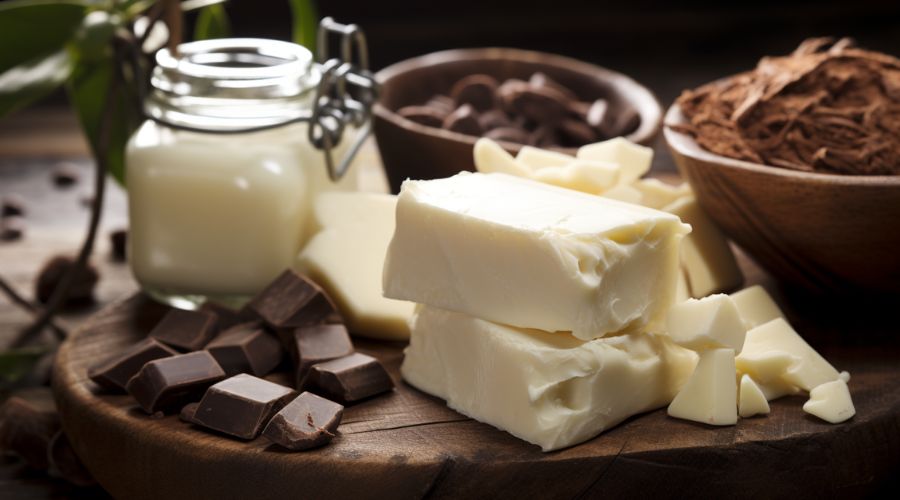
Cocoa butter fatty acid profile helpful table:
| Fatty Acid | Characteristics | Role in Cocoa Butter |
|---|---|---|
| Stearic Acid | Saturated fatty acid; solidifying properties. | Contributes to cocoa butter’s solid-at-room-temperature quality. Ideal for lotions, lip balms, chocolates. |
| Oleic Acid | Monounsaturated fatty acid; moisturizing properties; potentially beneficial for heart health. | Lends moisturizing properties to cocoa butter. Beneficial when consumed in moderation. |
| Palmitic Acid | Saturated fatty acid; lends solidity. | Adds further solidity to cocoa butter. Consume in moderation due to potential health concerns. |
| Linoleic Acid | Polyunsaturated fatty acid; essential for the human body; moisturizing and inflammation-soothing capabilities. | Present in smaller amounts; contributes to cocoa butter’s skin-care benefits. |
| Phytochemicals and Antioxidants | Fight against free radicals; offer potential anti-aging benefits. | Present in cocoa butter; contribute to potential health and anti-aging benefits. |
Keep in mind that the exact percentages of each fatty acid can vary depending on the specific product or brand. It’s always a good idea to check the label if you need precise information.
The Health Benefits of Cocoa Butter
Cocoa butter, with its rich source of vitamins E, D, and K, offers numerous health benefits such as moisturizing the skin and reducing wrinkles. It also contains healing properties for the skin and protects against sun damage while promoting healthier cholesterol levels and even reducing symptoms of liver disease.
Source of Vitamin E, Vitamin D, and Vitamin K
Cocoa butter is a powerhouse of essential vitamins that your body craves. Enriched with Vitamin E, it offers antioxidant properties to help neutralize harmful free radicals in your body.
Its Vitamin D content contributes to maintaining strong bones and robust immune function. Even more impressive, cocoa butter boasts considerable Vitamin K, vital for blood clotting and bone metabolism.
Feasting on this nutritional elixir allows you to reap multiple health benefits while adding a culinary delight to your health regime!
1. Moisturizes skin and helps reduce wrinkles
Cocoa butter is not only a delicious ingredient in chocolate, but it also has amazing benefits for your skin. One of its key properties is its ability to moisturize the skin and help reduce wrinkles.
This is due to the high content of fatty acids present in cocoa butter, such as stearic acid and oleic acid.
Stearic acid acts as an emollient, creating a protective barrier on the skin that helps lock in moisture. It forms a thin layer on the surface, preventing water loss and keeping your skin hydrated throughout the day.
Additionally, oleic acid has hydrating properties too, helping to repair and nourish dry or damaged skin.
Furthermore, cocoa butter contains antioxidants like polyphenols that can help fight off free radicals responsible for premature aging. These antioxidants work together with fatty acids to improve elasticity and firmness while reducing the appearance of fine lines and wrinkles.
2. Contains healing properties for the skin
Cocoa butter moisturizes and nourishes the skin and possesses incredible healing properties. Cocoa butter can help soothe and heal various skin conditions thanks to its rich fatty acid profile.
The combination of stearic, oleic, palmitic, and linoleic acids in cocoa butter promotes deep hydration and forms a protective barrier on the skin’s surface.
One of the key healing properties of cocoa butter is its ability to reduce inflammation. It contains anti-inflammatory polyphenols, helping calm irritated or red skin.
Additionally, cocoa butter aids in repairing damaged skin cells by promoting collagen production.
Cocoa butter’s high antioxidant content also contributes to its healing properties. Antioxidants combat free radicals that cause oxidative stress and damage to the skin. This helps prevent premature aging signs like wrinkles, fine lines, and age spots.

3. Protects against sun damage and can be used to protect hair
Cocoa butter moisturises the skin and acts as a natural sunscreen, protecting against harmful UV rays. Its high antioxidant content helps neutralize free radicals caused by sun exposure, reducing the risk of sun damage and premature aging.
Additionally, cocoa butter can be used to protect your hair from environmental stressors such as heat and pollution, providing a barrier that locks in moisture and shields it from damage.
So whether you’re spending time outdoors or want to keep your hair healthy and shiny, incorporating cocoa butter into your skincare and haircare routine is wise.
4. Promotes healthier cholesterol levels and reduces symptoms of liver disease
Cocoa butter delights our taste buds and offers numerous health benefits. One of its remarkable qualities is its ability to promote healthier cholesterol levels and reduce symptoms of liver disease.
The fatty acid profile of cocoa butter, which includes stearic acid and oleic acid, plays a crucial role in these benefits. Unlike other saturated fats, stearic acid has been found to have a neutral effect on cholesterol levels, meaning it does not raise LDL (bad) cholesterol or lower HDL (good) cholesterol.
In fact, studies have shown that consuming stearic acid can even increase the level of HDL cholesterol in the body. This is particularly important as maintaining healthy cholesterol levels is essential for cardiovascular health.
Nutrients in Cocoa Butter
Cocoa butter is rich in polyphenols and fatty acids, which provide numerous health benefits for the skin and overall well-being.
1. Polyphenols and Fatty Acids
Polyphenols and fatty acids are important components found in cocoa butter. Polyphenols are a type of antioxidant that helps protect against free radicals and oxidative stress in the body.
These compounds have been linked to various health benefits, such as reducing inflammation, improving heart health, and even potentially preventing certain types of cancer. Fatty acids, on the other hand, play a crucial role in maintaining healthy cholesterol levels and supporting overall cardiovascular health.
The combination of polyphenols and fatty acids found in cocoa butter makes it delicious and beneficial for our well-being.
2. Other important nutrients
In addition to its rich fatty acid profile, cocoa butter contains many other important nutrients. These nutrients work together to provide numerous health benefits and make cocoa butter a highly valuable ingredient in skin care products and culinary creations. Here are some of the other important nutrients found in cocoa butter:
- Polyphenols: Cocoa butter is a rich source of polyphenols, which are powerful antioxidant compounds. These polyphenols help protect the body’s cells from oxidative damage caused by free radicals, reducing the risk of chronic diseases such as heart disease and cancer.
- Vitamin E: Cocoa butter is packed with vitamin E, a fat-soluble antioxidant that plays a crucial role in maintaining healthy skin and hair. Vitamin E helps nourish the skin, improving its elasticity and preventing premature aging.
- Minerals: Cocoa butter contains essential minerals like copper, magnesium, iron, and manganese. These minerals play an important role in various bodily functions, including energy production, nerve function, and immune system support.
- Phytosterols: Phytosterols are plant compounds that have been shown to have cholesterol-lowering effects. Cocoa butter contains phytosterols that can help reduce LDL cholesterol levels, promoting cardiovascular health.
- Polyunsaturated fats: Alongside its saturated fats, cocoa butter also contains polyunsaturated fats like linoleic acid and alpha-linolenic acid. These beneficial fats have anti-inflammatory properties and contribute to overall heart health.
- Tocopherols: Tocopherols are specific vitamin E compounds with additional antioxidant capabilities beyond their general vitamin E activity. The presence of tocopherols enhances the overall antioxidant capacity of cocoa butter.

Types of Cocoa Butter
Several types of cocoa butter are available, including refined, unrefined, ultra-refined, and organic options.
Refined, Unrefined, Ultra-refined, and Organic Cocoa Butter
Understanding the differences between refined, unrefined, ultra-refined, and organic cocoa butter is key to choosing the best option for your needs. Each type has unique characteristics due to their fatty acid profiles and the methods used in their extraction and processing.
| Type of Cocoa Butter | Fatty Acid Profile | Extraction and Processing Method | Usage |
|---|---|---|---|
| Refined Cocoa Butter | Contains the full range of fatty acids, including palmitic, stearic, and oleic acids. The fat content is quite high. | Extracted using high heat and solvents, which removes some nutrients and impurities. | Commonly used in confectionery, baked goods, and cosmetics due to its neutral flavor and smell. |
| Unrefined Cocoa Butter | Preserves the full fatty acid profile, including palmitic, stearic, and oleic acids. It also retains the natural nutrients from the cocoa bean. | Extracted without the use of high heat or solvents, keeping its nutrient content intact. | Used in natural, healthful products due to its nutritional benefits and rich chocolatey aroma. |
| Ultra-refined Cocoa Butter | Contains the full range of fatty acids, but the nutrients content is significantly reduced due to the intensive refining process. | Undergoes a more intensive refining process that removes nearly all taste, smell, and color, resulting in a very pure, white fat. | Widely used in high-end cosmetics and skincare products because of its purity and gentle characteristics. |
| Organic Cocoa Butter | Maintains the complete fatty acid profile. Being organic, it also ensures no chemical pesticides are present. | Extracted using methods that do not involve synthetic additives, complying with organic standards. | Preferred for use in organic products, both in the food and cosmetics industry, due to its purity and the absence of chemical contaminants. |
How to Use Cocoa Butter
Massage a small amount onto your skin using circular motions to get the most out of cocoa butter. This will help to deeply moisturize and nourish your skin, leaving it soft and smooth.
Don’t forget to apply cocoa butter on areas prone to dryness, such as elbows, knees, and heels. Ready for more tips? Keep reading!
Tips for using cocoa butter and precautions to take
Cocoa butter is a versatile and beneficial ingredient that can be used in a variety of ways. Here are some tips to help you make the most of cocoa butter and important precautions to consider:
- Apply cocoa butter directly on your skin: Cocoa butter has excellent moisturizing properties, making it an ideal natural remedy for dry or irritated skin. Gently massage a small amount of cocoa butter onto your skin to lock in moisture and leave your skin feeling soft and smooth.
- Use cocoa butter for stretch marks: Cocoa butter is known for its ability to improve the appearance of stretch marks. Regularly applying cocoa butter to areas prone to stretch marks, such as the abdomen, thighs, and breasts, can help reduce their visibility over time.
- Protect your hair with cocoa butter: Cocoa butter can also be used as a leave-in conditioner or mask to promote healthy hair growth and prevent heat-styling or environmental damage. Apply a small amount of melted cocoa butter onto damp hair, focusing on the ends, and style as usual.
- Store cocoa butter properly: To ensure that your cocoa butter maintains its quality over time, store it in a cool, dark place away from direct sunlight or high temperatures. This will help preserve its beneficial properties and prevent it from melting or becoming rancid.
- Conduct a patch test before use: Some individuals may have allergies or sensitivities to certain ingredients, including cocoa butter. Before using it on larger areas of your body, perform a patch test by applying a small amount of melted cocoa butter on a small area of your skin and wait for 24 hours. If no irritation occurs, you can safely use it.
- Avoid using expired or low-quality products: Check the expiration date before using any cocoa butter product to ensure its efficacy and safety. Choose reputable brands that produce high-quality cocoa butter without additives or harmful chemicals.
- Do not ingest large amounts: While cocoa butter is generally safe for external use, it is not meant to be consumed in large quantities. Although it is edible, excessive consumption may lead to weight gain or digestive issues due to its high-fat content.
- Use caution during pregnancy: While cocoa butter is often recommended for reducing the appearance of stretch marks during pregnancy, it’s important to consult with your healthcare provider before using any new skincare product while pregnant or breastfeeding.
Conclusion
In conclusion, understanding the fatty acid profile of cocoa butter is essential to fully appreciate its numerous health benefits and versatile uses. With its rich composition of palmitic, stearic, oleic, linoleic, and alphalinolenic acids, cocoa butter offers moisturizing properties for the skin and promotes healthier cholesterol levels.
Whether you’re using it as a skincare ingredient or incorporating it into your diet, cocoa butter’s unique fatty acid profile makes it a valuable addition to any routine. Explore the world of cocoa butter and discover its remarkable potential today!
Resources
https://www.frontiersin.org/articles/10.3389/fnut.2021.677000/full
https://www.webmd.com/diet/health-benefits-cocoa-butter
https://www.researchgate.net/figure/Fatty-acid-and-triglycerides-profile-of-genuine-cocoa-butter_tbl1_308523494
https://clubchokolate.com/blogs/dark-chocolate-experience-blog/cacao-butter-health-benefits
https://www.nutritionadvance.com/cocoa-butter-nutrition/
https://chocolatealchemy.com/blog/2015/08/27/ask-the-alchemist-129
https://www.ncbi.nlm.nih.gov/pmc/articles/PMC8067814/